DRYWALL & PLASTER · ST. JOSEPH
Drywall and Plaster Repair in St. Joseph
In most American cities, "drywall repair" means drywall. In St. Joseph, 35.9% of homes were built before 1950 (Census ACS 2020–2024), more than twice the national share, and plaster was the standard wall finish until after World War II. So the wall you want fixed may well be plaster. Plaster fails differently, gets patched wrong more often, and on a pre-1978 wall the lead and asbestos check comes before any sanding.
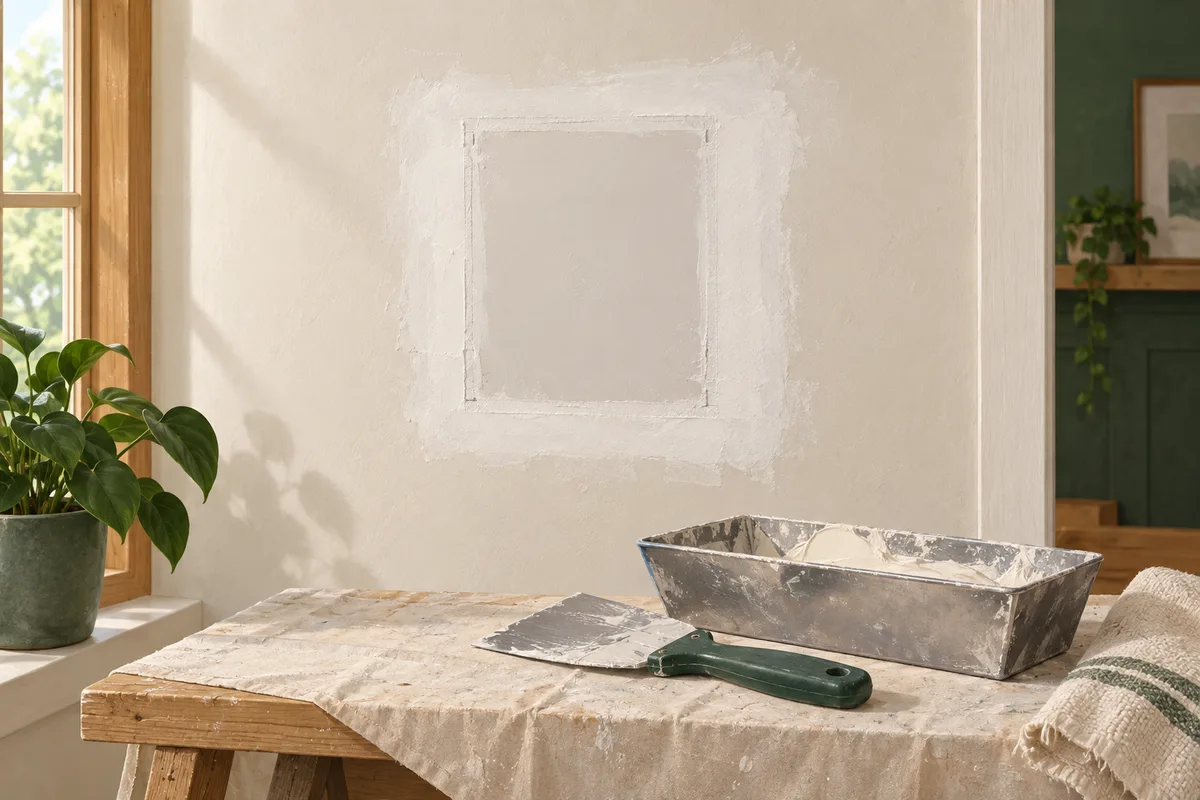
First: which wall do you have?
| Plaster (common in pre-1950 houses) | Drywall (most post-1950 houses and later remodels) | |
|---|---|---|
| Knock test | Solid, hard, cold to the touch | Hollow between studs |
| Behind it | Wood lath strips (older) or metal or gypsum lath | Studs 16 or 24 inches apart |
| How it fails | Keys break and it pulls away and bulges; spiderweb and stair-step cracks; the finish coat delaminates | Nail pops, tape seams cracking at corners, dents, holes |
| Common wrong fix | Drywall compound skimmed over loose plaster; a mesh-tape patch on a crack that moves with the seasons | Patching over a wet stain before the leak is fixed |
| Right fix | Reattach with plaster washers or adhesive, then fill with a setting-type compound or plaster, and match the surface | Back the hole, tape, three coats, match the texture, prime |
Many St. Joseph houses have both: original plaster in the main rooms and drywall in a kitchen, bath or addition. Where the two meet is a common crack line.
Why cracks come back in St. Joseph
A crack that comes back after it's patched is telling you something is moving. Much of St. Joseph sits on loess, a silt that loses strength when wet, and May is the city's wettest month. Older frame houses here are mostly balloon-framed, so settling on one floor can show up on two. Those are possible contributors to recurring cracks, not a diagnosis of an individual house. → Why St. Joseph houses move · When to fix what: the St. Joseph repair calendar
A crack that changes with the seasons needs its movement and possible causes assessed before choosing a repair. Timing alone does not distinguish humidity, a failed joint or a structural problem. Widening cracks, changed floor levels or doors that suddenly stop closing warrant structural assessment before patching. National Park Service plaster guidance explains the different causes and the need to resolve structural problems before repair.
Water stains: fix the source first
Painting over a water stain without fixing the leak means you'll pay for the same patch twice. Before we close anything, we want to know:
- Where it came from: roof or flashing, a bathroom above (toilet wax ring, tub drain, shower valve), a supply line, a condensate line, or ice damming at the eaves.
- Whether it's fixed and dry: wet plaster and wet drywall both need to dry out before repair.
- Who fixes the source: confirm the plumber's required license and the task's permit status before arranging the leak repair. A permit-exempt fixture replacement is not a licensing exemption. Keep the leak repair and subsequent wall repair as separate items in the scope.
Then we repair the substrate and prime it with a stain-blocking primer so the mark doesn't bleed back through.
Loose or sagging ceiling plaster
Keep people out from under it and don't push on it to test it. A bulging plaster ceiling has lost its keys and can come down in a piece. Depending on how much has let go, the repair is:
- Reattaching with plaster washers or an injected adhesive, then filling and skimming, when the plaster is sound but detached
- Cutting out and patching a section with new lath and plaster or drywall set flush, when a section is broken
- Overlaying or replacing the ceiling when too much of it has failed. This is a bigger job, and it's where lead and asbestos testing matters most.
The National Park Service's preservation guidance on repairing historic flat plaster walls and ceilings (Preservation Brief 21) supports stabilizing and reattaching sound plaster rather than tearing it out.
Lead and asbestos: before any sanding
About three-quarters of St. Joseph homes were built before 1980. Paint on walls built before 1978 may contain lead, and federal EPA lead-safe rules cover most paid work that disturbs it. → Lead and older homes Some old ceiling textures and plaster finishes can also contain asbestos. EPA says you can't tell by looking and recommends sampling by an accredited professional.
So sanding dust from an old wall isn't just a cleanup issue. We plan containment and cleanup into the quote on older houses, and we have suspect ceilings and textures sampled before we disturb them.
Does drywall or plaster repair need a permit in St. Joseph?
We read patching as finish work. The city's permit-exempt list covers "Painting, papering, tiling, carpeting, cabinets, counter tops and similar finish work," though it doesn't name drywall or plaster. Taking out or moving walls, or opening walls to change wiring or plumbing, is remodeling or trade work, and the city lists those as permit-required. → St. Joseph permit guide
What drywall and plaster repair costs
National benchmarks give a rough frame:
- HomeGuide's national drywall guide, checked October 17, 2026: $300–$500 for a small hole under 4 inches. Minimum visit charges may exceed a single-patch price; texture, primer and painting may be extra
- Angi's national plaster repair figures: about $48 per square foot on average, "3-inch hole: $50," "5-inch crack: $90"
What moves a St. Joseph job inside or above those ranges: plaster versus drywall, how much has come loose, lead-safe containment, matching an old texture, and whether the room needs repainting wall to wall so the patch doesn't show. Repair labor billed separately isn't subject to Missouri sales tax. → What handyman work costs in St. Joseph
Agree on "finished" before we start
"Patch the hole" can mean a filled opening, a primed patch or a painted wall. We write it down: backing, tape or reinforcement, compound or plaster, texture matching, primer and paint. Old textures can make a sound repair show under raking light, so we agree on a finish boundary (usually a corner) with you first.
What to send us
- A photo of the whole wall or ceiling, plus a close-up of the damage
- Roughly when the house was built, and whether you know if the wall is plaster
- For cracks: when it first showed up and whether it changes with the seasons
- For stains: what's above it, and whether the source has been fixed
CUSTOMER RECOMMENDATIONS
What customers say about our handyman provider
Selected Facebook recommendations for House Doctors of Saint Joseph, the service provider for St. Joseph Handyman Services. These describe work across the provider’s service area.
Recommended on Facebook
Drywall repair
“The technician patched the area perfectly and blended the texture so well that you can’t even tell where the damage used to be.”
Read Facebook recommendations · Checked September 28, 2026.
Get a drywall or plaster quote.
Tell us what you're seeing and roughly when the house was built.
Get a plaster or drywall quote →